
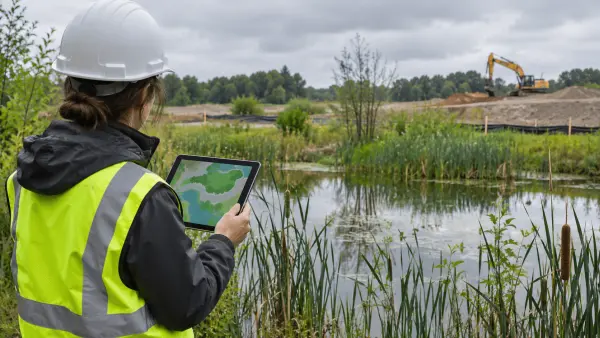
Environmental and sustainability jobs cover environmental consulting and assessment, conservation and ecology, pollution and waste management, climate policy, and corporate sustainability and ESG reporting. Employers include engineering consultancies, utilities, road and water agencies, local governments, companies with sustainability teams, NGOs and UN bodies. Contracts range from internships and fixed-term project posts to permanent public-sector and consultancy roles.
What sets the field apart is that much of the work is tied to national law. Environmental advisers apply local planning, pollution and nature rules, and ecologists often need national registration, so local knowledge and language matter as much as a degree. The corporate side, sustainability management and ESG reporting, moves more easily across borders but depends on regulation that is now changing.
This guide covers the boards that list environmental and sustainability jobs in over a dozen countries, the trends shaping green hiring, pay data where it is published and online communities. Board counts were checked on 7 November 2026. For current vacancies, see our page of environmental and sustainability open positions, which links each ad directly.
How green hiring is changing
LinkedIn’s Global Green Skills Report 2026, published on 22 October 2026, found that workers with green skills were hired at a rate 52.7% higher than the overall workforce as of July 2026. Green hiring grew at 13.1% a year from 2021 to 2026, faster than the 11.0% growth in workers with those skills, according to a summary of the LinkedIn report. LinkedIn changed its definition this year, so the figures cannot be compared with earlier editions.
The picture is uneven, however. LinkedIn’s 2025 data showed global corporate sustainability roles falling slightly, by 0.4% year on year, even as green hiring overall grew. Much of the growth is in energy, utilities, construction and technology roles that need green skills, rather than in jobs with “sustainability” in the title.
Regulation is shifting too. The EU’s Omnibus I directive, in force since 18 March 2026, narrowed mandatory corporate sustainability reporting under the CSRD to companies with more than 1,000 employees and over €450 million in turnover. Advisers estimate this removes most of the companies originally covered, which reduces demand for some ESG reporting roles in Europe while larger groups continue to report.
Where environmental jobs are advertised
Most environmental hiring abroad runs through national job boards and government portals. The counts below are keyword searches on 7 November 2026, and several boards match loosely, so filter by job title.
International organizations and climate platforms
UN Environment Programme (UNEP), the Asian Development Bank and other international bodies hire program officers, safeguards specialists and analysts. A search for environment officer on Impactpool’s environment listings returned mostly UNEP posts in Bangkok, Nairobi, Paris and Pretoria, plus an ADB safeguards role. Impactpool is an aggregator, so confirm deadlines on the UN’s Inspira portal or the bank’s own site.
Climatebase is a climate-focused job platform aimed at people moving into climate work. Our guide to UN and NGO jobs explains UN grades and which posts are open only to nationals.
National job boards
Norway’s public portal, arbeidsplassen.nav.no, returned 56 results for miljørådgiver (environmental adviser), with posts at consultancies, the national roads agency and municipalities. In Switzerland, a sustainability search on jobs.ch returned 197 offers, though only a few on the first page were sustainability roles, including posts at a tourism board and Siemens.
Germany’s Make it in Germany portal returned 52 results for environmental, mostly environmental engineers and technologists in waste, water and recycling, many at municipal utilities. These roles usually require German and often a German vocational qualification.
South Africa’s PNet returned more than 7,000 results for environmental, a loose match that still included environmental officers, ecologists and managers at Eskom and mining operations. In Colombia, elempleo returned 20 results for ambiental, from internships to senior roles, most with stated pay. Estonia’s CV.ee returned no sustainability roles when we checked, and Canada’s Job Bank returned few recent environmental postings.
Qualifications, registration and languages
Most professional roles ask for a degree in environmental science, engineering or a related field, and senior consultancy posts often prefer a master’s. Some countries require registration: South African ecology ads we checked made registration with SACNASP, the natural science professions council, mandatory. Many field roles also require a driver’s license, as Norwegian and South African ads did.
Language is usually decisive. Norwegian environmental adviser posts required good written Norwegian, Swiss roles asked for fluent German, and German utility jobs assume German. English-only roles appear mainly at international organizations, development banks and some multinational companies, such as a Norwegian pharmaceutical plant that accepts Norwegian or English.
What environmental jobs pay
Official pay data is limited, and most ads we checked did not state pay. The table separates official statistics from ad figures, which are single vacancies and not averages. Figures are in local currency and are not converted.
| Country | Role or group | Pay | Type | Source |
|---|---|---|---|---|
| Australia | Environmental scientists | A$1,953 a week (median, full time) | Official | Jobs and Skills Australia |
| Canada | Environmental consultants (NOC 41400) | C$40.00 an hour (median; data updated November 2023) | Official | Job Bank |
| Colombia | Environmental engineering intern, Bogotá | COP 1.8 million a month (training stipend) | Ad | elempleo |
| United States | Environmental scientists and specialists | $82,220 a year (median, May 2025) | Official | US Bureau of Labor Statistics |
The Australian figure covers full-time employees in the environmental scientists group, which includes conservation officers, consultants and park rangers, from an ABS survey in May 2025. The Canadian figure is older than most Job Bank wage data, so treat it as a rough guide.
Norwegian public employers referred to their own pay policies or set pay by agreement, and Swiss and South African ads mostly said only that pay was competitive or negotiable. UN professional posts follow published UN salary scales, which vary by grade and duty station.
Communities for environmental professionals
Reddit’s r/environmental_science and r/sustainability host career questions, from which degree to take to how to move from consulting into policy. LinkedIn is the main network for corporate sustainability and ESG roles, and many consultancies post openings there.
Professional bodies matter for credentials and job leads, from national environmental and ecological institutes to natural science registration councils. YouTube and Instagram carry field and conservation content, useful for learning about specialties, though hiring rarely happens there.
For a closer look at energy transition work, see our post on renewable energy jobs worldwide.
What to watch
The US BLS projects jobs for environmental scientists and specialists to grow 6% from 2025 to 2035, faster than average, with about 7,300 openings a year. That may point to steadier demand for technical environmental work than for corporate ESG roles, which depend more on reporting rules.
The next signal comes from COP31, the UN climate conference in Antalya, Türkiye, from 9 to 20 November 2026. Its outcomes on national climate plans and finance could affect funding for climate programs, and with it hiring at international organizations and NGOs in 2027.