The FIFA World Cup 2026 is already underway, with 104 matches spread across 11 US cities plus venues in Canada and Mexico through July 19. For job seekers in or near the host cities, the hiring window is open right now. For everyone else, the tournament is a useful case study in how major global events create short bursts of real employment, what those jobs actually involve, and what the honest limits of the opportunity are.
The numbers
The headline figure comes from a joint FIFA and World Trade Organization study projecting the tournament will create more than 185,000 jobs across the United States and generate around $30.5 billion in gross economic output. Canada and Mexico, as co-hosts, will see comparable though smaller surges in their host cities: Toronto, Vancouver, and Guadalajara, Monterrey, and Mexico City respectively.
The regional distribution in the US is uneven. OysterLink data published June 3 showed hospitality job postings across the 11 US host metros climbed 30.3% in May compared to the January-April average, while non-host markets fell 23.8%. Philadelphia led with postings up 83%, followed by Boston at 61% and Atlanta at 55%. New York and New Jersey, which host eight matches including the final on July 19, recorded a 23% increase.
The US Department of Labor announced on May 29 that it is offering free compliance assistance to employers in every host city, a signal the hiring rush is large enough to warrant federal wage-and-hour attention before problems emerge.
What the jobs actually are
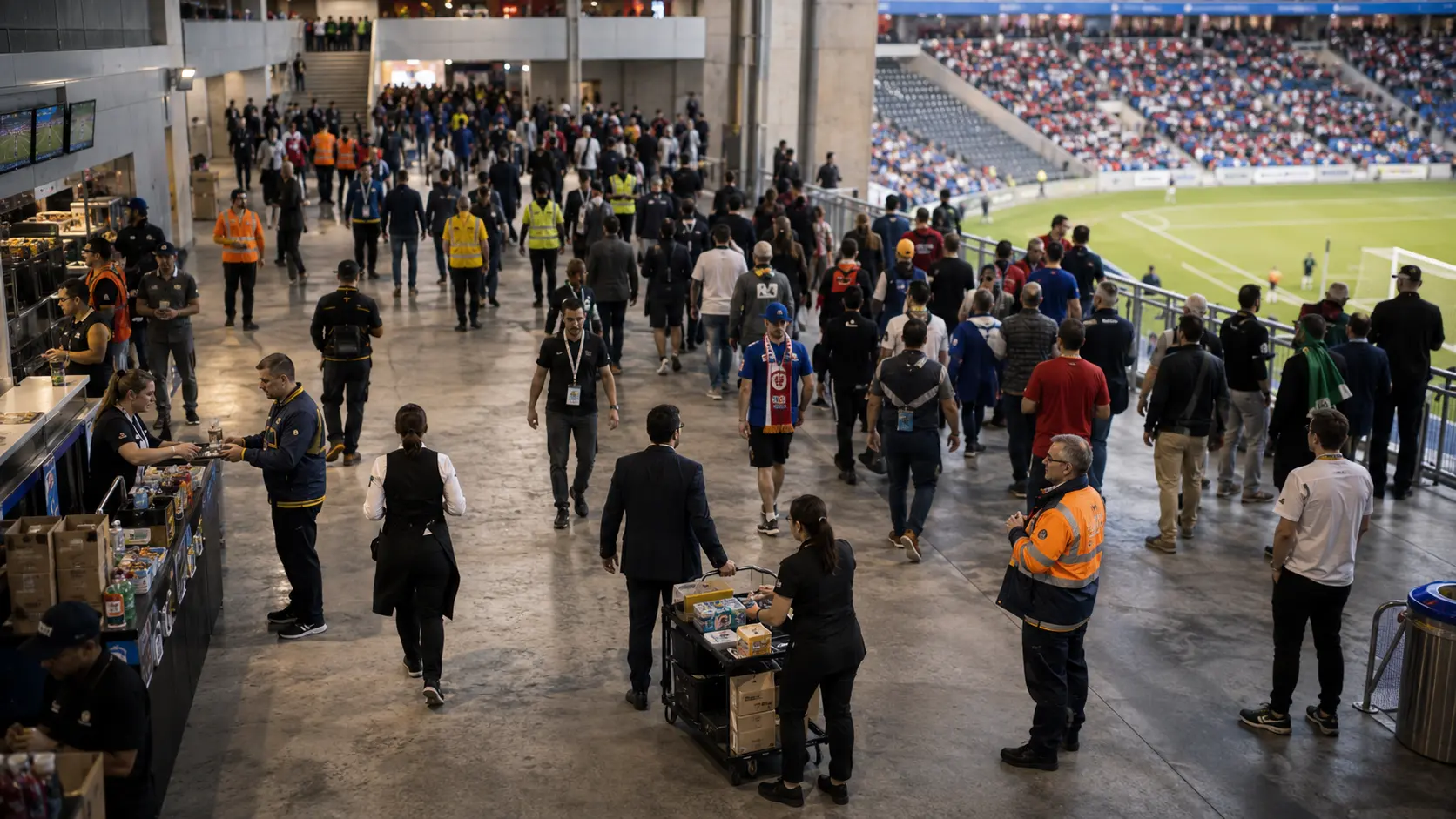
The strongest hiring growth is concentrated in roles tied directly to events, tourism, and guest services: hotel managers, event coordinators, valets, delivery drivers, bartenders, servers, and front-of-house restaurant staff. Security and transport roles are also significant, with stadium and fan zone operations requiring large workforces that existing staff cannot cover alone.
Beyond hospitality, the tournament has produced roles in event operations, marketing, media, sponsorship activation, and logistics through FIFA’s official partners and subcontractors. Companies including Octagon, On Location, and TKO have been hiring around the event. FIFA’s own job portal and TeamWork Online list official roles across all host cities. Multilingual candidates have a specific advantage: with fans arriving from across 48 competing nations, Spanish, Portuguese, French, Arabic, and German speakers are in demand across hospitality and guest services.
The honest limits
The large majority of these positions are temporary or contract-based, not permanent. The White House FIFA World Cup 2026 Task Force projects 185,000 jobs tied to the tournament, but the operative word is tied. Most end when the final whistle blows on July 19.
This is not unusual for major sporting events, and it is not a reason to dismiss the opportunity. A summer of event work builds verifiable experience in hospitality, event management, or logistics that carries genuine weight on a resume, particularly for early-career workers. For anyone considering a career in events, sports administration, or tourism, working a World Cup is a credential few competitors will have. The temporary nature of the role is a feature if you are building experience rather than a problem if you are looking for stability.
The regional concentration is the other real limit. With matches in Atlanta, Boston, Dallas, Houston, Kansas City, Los Angeles, Miami, New York/New Jersey, Philadelphia, the San Francisco Bay Area, and Seattle, the US jobs are geographically specific. For readers outside North America, the direct opportunity is minimal, though the model repeats: the 2028 Olympics will be in Los Angeles, the 2030 World Cup spans Europe and South America, and the 2034 edition goes to Saudi Arabia. Each creates a comparable, predictable hiring surge.
A scam warning worth including
Several sites appearing in searches for “World Cup 2026 jobs” are not affiliated with FIFA and show signs of being fraudulent: vague job descriptions, promises of flights and accommodation, application deadlines that have already passed, and no verifiable employer behind the listing. Legitimate World Cup employment comes through FIFA’s official careers portal, the local organizing committees, named partner companies such as those listed above, and established hospitality employers in host cities. Any listing that asks for payment, requests your bank details before hire, or promises travel coverage from an unverified source should be treated with suspicion.
Where to look right now
The hiring window is open but not indefinitely. The final is July 19, and hospitality employers in particular will fill most roles well before then. If you are based in or near a host city and looking for work in the next month, these are the relevant sources:
- FIFA official careers portal — roles directly with FIFA and tournament partners
- TeamWork Online — FIFA World Cup 2026 — sports industry roles across all host cities
- OysterLink — hospitality and restaurant roles in host markets
- ZipRecruiter — World Cup 2026 jobs — broad aggregation across all categories
- Local hospitality employers in host cities — hotels, catering companies, and event operators are hiring directly and not all postings reach the major aggregators