For the first time in recorded labor history, five generations are working alongside each other — though in most offices today, the active tension is between three: Gen X, millennials, and Gen Z. How much of that tension is real, how much is perception, and what can actually be done about it?
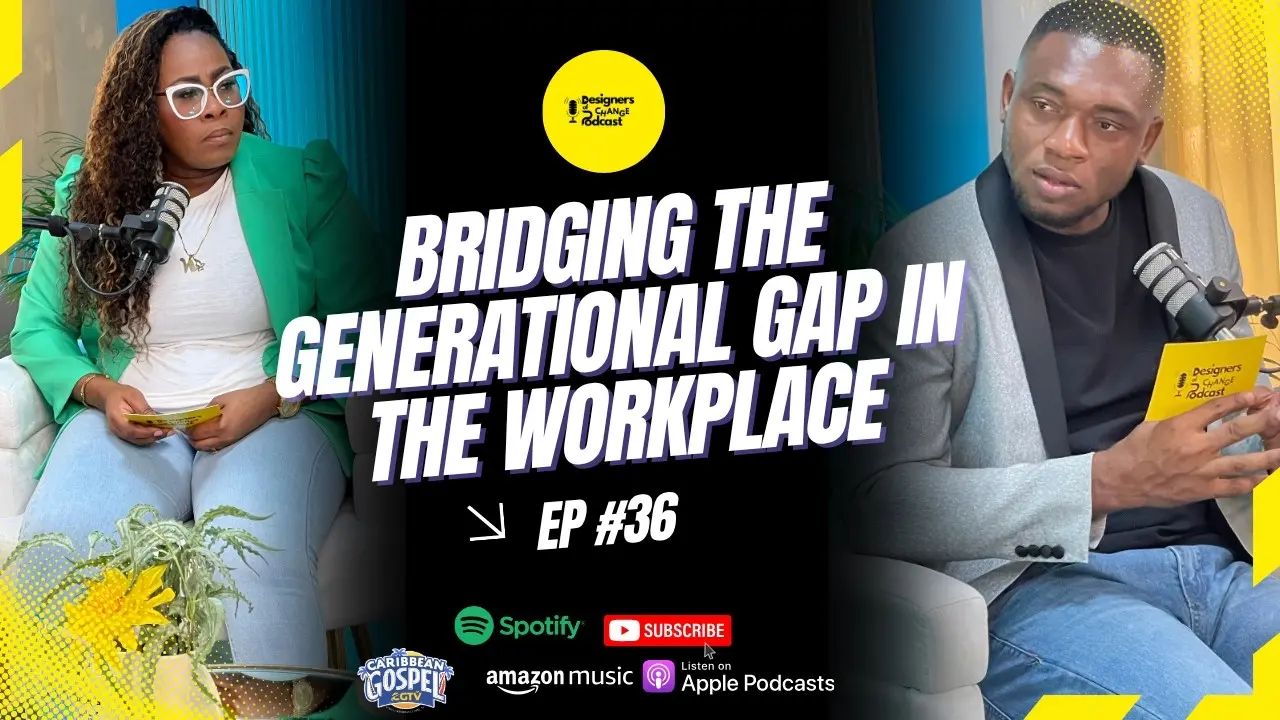
Those questions run through a recent episode of Designers of Change, a podcast hosted by consultants based in the Caribbean. The episode draws on firsthand experience from executive leadership training and is practical rather than academic — a useful starting point for a topic that research organizations have been tracking closely.
Who Is Actually in the Workforce
The hosts use broad generational definitions: Gen X (born 1965 to 1980), millennials (1981 to 1996), and Gen Z (1997 to 2012). These are the three cohorts most organizations are managing simultaneously right now. Baby boomers are still present but aging out; Gen Alpha won’t arrive in meaningful numbers until the late 2020s.
The numbers reinforce why this matters at a planning level. Deloitte projects that millennials and Gen Z will make up roughly 74% of the global workforce by 2030. That’s not a distant scenario — it’s the workforce that hiring managers are building toward right now. Meanwhile, in Europe, the overall workforce is projected to shrink by 25% over the next two decades, which means retaining workers across age groups isn’t optional.
The podcast hosts characterize each generation by their formative relationship with technology: Gen X grew up with television, millennials with the internet, Gen Z with the smartphone. It’s a shorthand with limits — generations are not monolithic, and Pew Research has cautioned against treating generational labels as uniform identities — but it captures something real about baseline assumptions around communication and work tools.
The Recognition Gap
One exchange in the podcast lands close to something managers report constantly. A Gen Z employee complains that their Gen X manager is “harsh” and “just gives instructions” without appreciation or recognition. The Gen X manager’s response: “What do they want — a pat on their back? You’re already getting paid.”
Neither position is unreasonable on its own terms. Gen X workers entered a labor market where job security was the reward. Gen Z workers entered one where, according to SHRM, 61% would leave a job for one with stronger mental health support, and where feedback frequency is closely tied to whether they feel psychologically safe. The friction isn’t about soft versus tough — it’s about what counts as being treated well at work.
The costs are measurable. SHRM’s Q1 2025 Civility Index found that about one in three employees say generational differences contributed to acts of incivility they witnessed or experienced at work. Misread feedback norms are one of the more common sources.
The Mental Health Debate
The episode touches on the resilience question directly. A senior executive described at a corporate retreat how younger workers “aren’t mentally tough” and “quit for everything.” The hosts don’t entirely push back — they’re trying to explain the gap, not adjudicate it.
The data here is less ambiguous than the debate suggests. A July 2025 Seramount survey found that 72% of Gen Z workers and 77% of millennials report at least one symptom of burnout, compared to 62% of Gen X and 38% of boomers. That’s not a sign of weakness — it reflects that younger workers entered the labor force during periods of acute disruption and are carrying more accumulated stress than older cohorts did at the same career stage.
The “resilience” framing also tends to misread what Gen Z is actually responding to. When asked what makes work mentally draining, Gen Z workers most commonly cite unclear expectations, shifting priorities, and feedback that arrives too late to be useful — not workload alone. The critique isn’t “work is hard.” It’s “I can’t tell what good looks like here.” Gallup’s 2025 data shows depression rates among workers under 30 are nearly double what they were a decade ago.
Cross-Generational Mentorship: The Practical Case
The hosts spend most of their second segment on what they call “cross-pollination” — structured mentorship that pairs people across generations rather than down the hierarchy. The idea is that each generation has something to teach the others: Gen X brings pragmatism and institutional knowledge; millennials bring purpose-orientation and tech fluency; Gen Z brings innovation and a facility with emerging tools.
The evidence for this is reasonable, if imperfect. An AARP study from October 2025 found that 73% of workers say younger colleagues help them stay current with technology trends, and that 86% of mentorship participants say it was important to their professional growth. Reverse mentoring — where junior employees teach senior ones — was pioneered at General Electric in the 1990s specifically to close technology gaps, and has seen renewed interest as AI literacy becomes a baseline workplace requirement.
Caveats apply. A 2024 academic review noted that empirical evidence on the direct performance benefits of cross-generational mentoring remains thin, and that poorly designed programs can reinforce hierarchy rather than bridge it. The value seems real but execution matters considerably.
Communication Formats Across Generations
One of the more practical threads in the episode concerns communication norms. The hosts point out that Gen X managers may reach for a phone call, millennials default to WhatsApp or email, and Gen Z communicates in abbreviated text formats that read as unprofessional in formal documents. The example they use — an employee writing a work memo using text abbreviations — is one that HR managers in the UK, Singapore, and Nigeria have all reported encountering.
EY’s 2025 generation survey found that when all four major generations were asked to define good workplace culture, the single most common answer across all groups was “how people treat each other” — not management style, not flexibility policy, not compensation. That shared priority is worth holding onto when surface-level communication differences make generations feel more alien to each other than they are.
What the Research Adds
The podcast focuses on the Caribbean and North American context, but the dynamics it describes are not regionally specific. Deloitte’s 2026 Gen Z and Millennial Survey drew on responses from 22,595 people across 44 countries, and its findings on delayed life decisions, financial stress, and cautious career sequencing track closely with what the podcast hosts describe from their consulting work.
More than half of both Gen Z (55%) and millennials (52%) in that survey said they have delayed major life decisions — marriage, starting a business, further education — because of their financial situation. That context matters for understanding why these generations treat job security and pay transparency differently than their predecessors did at the same stage.
The KPI Question
One of the cleaner arguments in the episode is about focusing on results over presence. The hosts suggest that managers who get stuck on whether employees prefer three or five days in the office are missing the point: if KPIs are being met, the format is secondary. This isn’t a radical position — it’s essentially what hybrid work research has been finding for five years — but it tends to get buried under the generational conflict framing.
EY’s 2025 survey found that only 36% of workers across all generations feel their employer is investing in their professional growth and development. That gap isn’t generational — it points to an organization-wide management problem that no amount of cross-generational understanding will fix on its own.
The harder version of the KPI argument doesn’t get addressed in the podcast: what happens when results are difficult to quantify, or when in-person collaboration genuinely produces better outcomes? The “focus on results” frame works better for some roles and industries than others, and the debate plays out very differently in healthcare, manufacturing, and education — sectors where physical presence is not optional.