Recruiters and hiring managers say they spend an average of seven seconds scanning a resume before deciding whether to read further. That number comes from a TheLadders eye-tracking study that has circulated so widely it’s become almost mythologised. The more useful question isn’t whether the seven-second figure is exact — it’s what those seconds are actually spent looking at, and why.
The answer has shifted. Hiring in 2026 involves a different set of filters than it did even three years ago, and the conventional resume advice — quantify your achievements, keep it to one page, use keywords — is only partially right. Some of it is outdated. Some of it was always wrong.
The first filter is a machine, not a person
Most applications at mid-to-large employers never reach a human reader at all. Jobscan estimates that over 98% of Fortune 500 companies use applicant tracking systems (ATS) to filter submissions before any human sees them. For smaller companies the rate is lower, but ATS adoption has expanded significantly as the tools have become cheaper and easier to deploy.
ATS software parses resumes for keywords matched against the job description. A resume that doesn’t contain the right terms — even if the candidate is genuinely qualified — may never surface. This is why exact language from the job posting matters: if the role asks for “project management” and your resume says “project coordination,” a basic ATS may not count it as a match.
The practical implication is not to stuff a resume with keywords. It’s to mirror the language of each specific job description in a natural way, especially in the skills and experience sections. A one-size-fits-all resume is increasingly a resume that passes no filters cleanly.
What a human actually looks at first
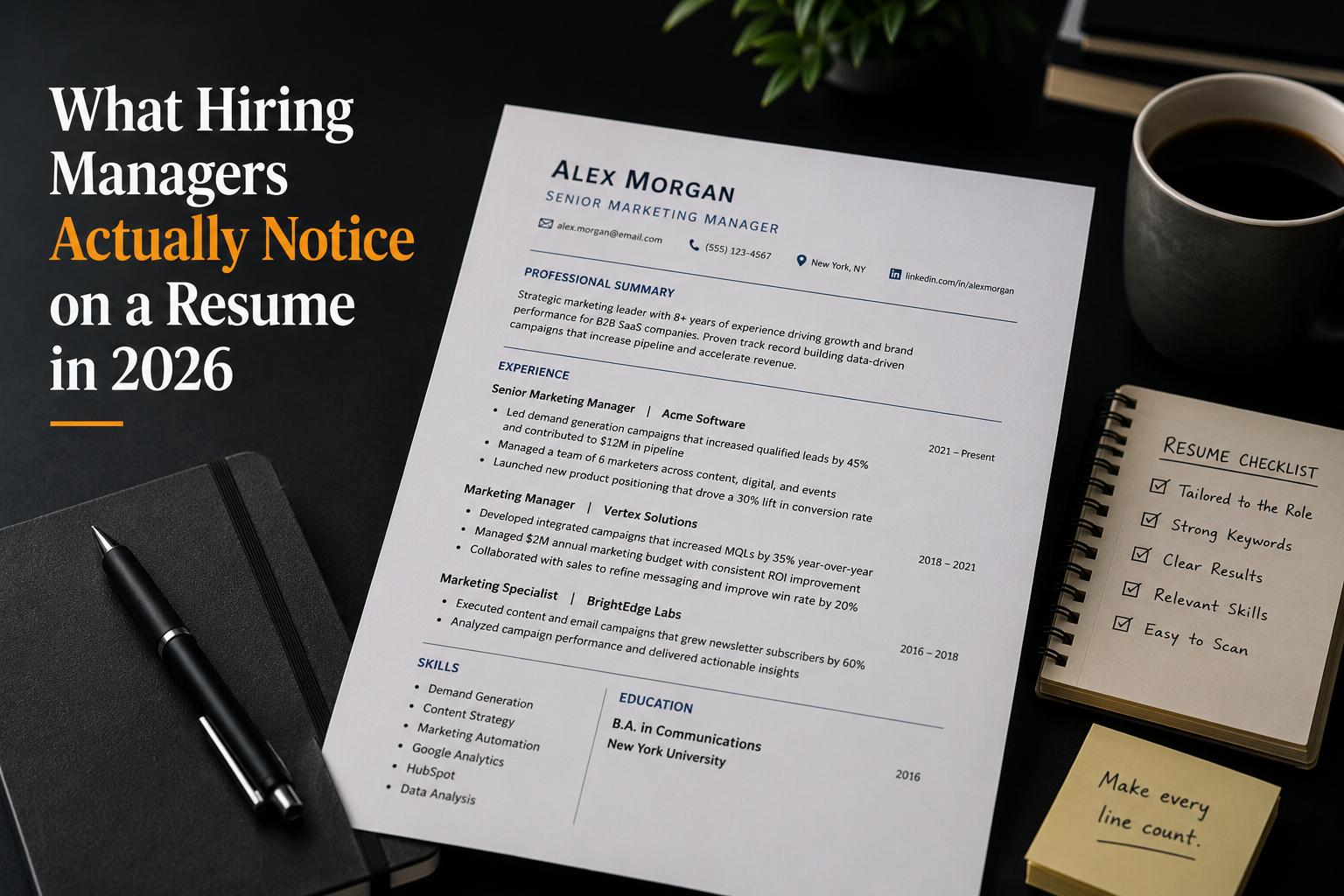
When a resume does reach a human, the TheLadders eye-tracking research found that readers spend most of their initial scan on a predictable set of elements: name, current job title and company, previous job title and company, start and end dates of employment, and education. These six data points get the most attention in those first seconds. Everything else — the summary paragraph, the skills list, the bullet points of achievements — gets significantly less.
That finding has a specific implication for how resumes should be structured. The job title and company name carry more weight in that initial scan than the description beneath them. A resume where these elements are visually prominent — not buried in dense text — is easier for a human to process quickly. Formatting is not decoration. It’s information architecture.
Quantified results still matter, but context matters more
The advice to quantify achievements is correct, but often applied without enough thought. “Increased sales by 40%” means very little without context — 40% of what, over how long, starting from where? A number that implies scale (“managed a $2M annual budget”) communicates differently than one that implies growth (“reduced processing time by 20%”). Both are useful. Neither is automatically better. The choice depends on what the role actually requires.
What hiring managers report noticing negatively: bullet points that describe responsibilities rather than outcomes (“responsible for managing the team” vs. “managed a team of eight through two product launches”), vague claims of leadership that aren’t grounded in anything concrete, and skills sections that list every tool ever touched rather than the ones most relevant to the job.
Employment gaps are less of a red flag than they used to be
A LinkedIn survey of talent acquisition professionals found that the majority of hiring managers now say they’re less concerned about employment gaps than they were five years ago. The pandemic normalised gaps in a way that has changed norms broadly. Gaps of a year or more may still prompt a question in interview, but they are far less likely to disqualify a candidate at the resume stage.
What matters more is how the gap is handled in the document. A brief, honest note — “career break for caregiving” or “period of independent study” — does more work than elaborate formatting strategies designed to obscure dates. Recruiters see those strategies constantly and often find them more conspicuous than whatever they’re trying to hide.
The one-page rule is more nuanced than it sounds
For candidates with fewer than ten years of experience, one page is typically the right target — not because of a rigid rule, but because most candidates at that stage don’t have enough distinct, relevant experience to justify two pages without padding. Two pages of padding reads worse than one tight page.
For senior candidates, two pages is normal and expected. Three pages is almost always too many. The functional test is whether every line is doing work — either establishing credibility, demonstrating relevant experience, or providing necessary context. Lines that don’t do any of those things should be cut regardless of page count.
What is actually different in 2026
The most significant change is that AI-generated resumes are now common enough that hiring managers are aware of them. A resume that reads as if every sentence has been optimised for readability by a language model — polished to the point of blandness, perfectly structured, free of any distinctive phrasing — can now read as a signal of low effort rather than high quality. The irony is that over-reliance on AI tools may be producing resumes that all sound like each other.
Specificity is the differentiator. Specific companies, specific numbers, specific project names, specific tools — these signal a real career rather than a well-prompted template. A hiring manager reading a hundred AI-smoothed resumes will notice the one that reads like it was written by an actual person who actually did those things.
The resume is not a comprehensive career history. It’s a curated argument for why this specific person should get an interview for this specific role. That framing — selective, purposeful, targeted — is what distinguishes a resume that gets read from one that gets filed.